Recycling and Sustainability for Flat Clearance Southfields
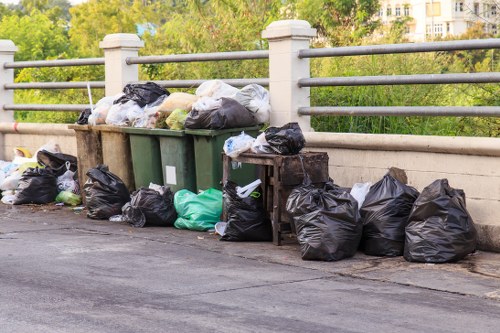 At Flat Clearance Southfields we place sustainability at the core of every removal, reuse and recycling decision. Our approach to flat clearance in Southfields combines practical waste management with an aim to create long-term environmental benefits for the local community. Whether you are clearing a one-bedroom flat or coordinating a larger block clearance, our team prioritises material diversion from landfill and promotes local re-use networks to maximise the life of furniture, appliances and household items.
Our Southfields clearance services are built around clear measurable goals, transparency and collaboration with borough services. We know that residents in the area expect an eco-friendly rubbish area solution that aligns with the borough’s household waste strategy, so we work closely with local authorities to ensure our operations complement the existing kerbside and civic amenity services.
Concrete recycling targets and reporting
Our formal recycling percentage target is bold and public: we aim to achieve a 75% recycling and reuse rate for all materials recovered through our flat clearance operations by the end of 2027, with an interim target of 65% by the close of 2026. These percentages include items sent for repair, reuse and donation as well as materials processed at authorised facilities. We report annually on diversion figures and material breakdowns so clients can see how each clearance contributes to the overall sustainable rubbish area ambitions.Local transfer stations and civic amenity partnerships
We use nearby transfer stations and household waste recycling centres to ensure each material stream is handled correctly. By directing glass, mixed plastics, metals, wood and inert materials to the appropriate facilities and transfer hubs, we reduce double-handling and cutting unnecessary journeys. Our operational plan maps common Southfields routes to the closest authorised sites and civic amenity hubs, enabling efficient drop-off and faster turnaround for bulky items and construction waste produced during clearances.To support an effective low-carbon approach we consolidate loads before transfer, and where possible separate loads on site so that recycling streams are clean and accepted by local processors. This attention to detail increases recovery rates for materials such as scrap metal, timber and clean plasterboard, and minimises the proportion of mixed waste that would otherwise be destined for disposal.
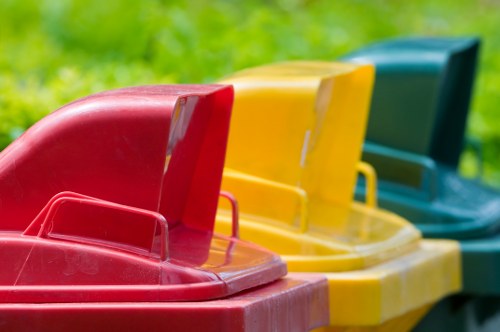 Types of recycling activity relevant to the borough: the borough encourages separation into dry recycling, food/garden waste and residual waste; our flat clearance teams extend that principle for bulky and household items. We actively divert: electronics (WEEE), textiles, mattresses for specialist recycling, timber to reprocessing, and white goods to repair or parts reclamation. Light, localised mention: where borough-level schemes support glass and paper collection, we mirror those streams to make end-to-end recycling simpler.
Partnerships with charities and reuse organisations
We have formal partnerships with several charities and social enterprises to maximise reuse rather than recycling when possible. Working alongside furniture reuse charities and local community groups helps keep sofas, beds and working appliances in circulation. Examples of organisations we collaborate with include furniture reuse charities and local donation hubs that specialise in preparing items for resale or direct community distribution.
How charity partnerships work in practice
When suitable items are recovered from a flat clearance, we assess them on-site and arrange collection or drop-off with our charity partners. This can include repairable white goods going to social enterprises, wearable textiles to textile recyclers or charity shops, and usable furniture to organisations that support local households in need. These partnerships not only extend product lifecycles but also support local employment and community benefit projects. Low-carbon vans and fleet measures: our transport strategy is central to minimising emissions in Southfields. We operate a mixed low-emission fleet that includes electric vans for last-mile and inner-London jobs, hybrid vehicles on longer routes, and recently upgraded Euro 6 standard vehicles where electric capacity is not yet viable. All vans are fitted with telematics to optimise routes, reduce idle time and tighten scheduling so fewer miles are driven overall.
Operational practices for a sustainable rubbish area
We deploy cargo bikes and pedestrian crews for very local jobs to reduce urban congestion and emissions. On-site segregation is standard: materials are split into clear streams for reuse, recycling and residual waste to keep contamination low and maximise acceptance at downstream processors. Our teams follow a strict protocol for hazardous items, ensuring safe handling and transfer to authorised hazardous waste facilities when required.We encourage landlords, managing agents and residents to prepare items for collection with simple separation guidance: soft furnishings for reuse, small electricals bagged separately, and loose household waste kept distinct from bulky items. This cooperation improves recycling outcomes and reduces processing costs, helping our targets be met more reliably across Southfields.
Monitoring, transparency and continuous improvement: each clearance is logged and assigned a material profile that feeds into our sustainability dashboard. We monitor tonnages, destination codes and recovery rates so our Flat Clearance Southfields operations continuously improve. Regular reviews with local authority contacts and charity partners help us refine routes, update acceptance procedures and increase reuse opportunities, meaning fewer items head to landfill and more are kept in productive use within the community.
Summary: By combining clear recycling targets, well-planned use of transfer stations, active charity partnerships and a low-carbon fleet, our Southfields flat clearance activities protect local green spaces and contribute to a resilient, sustainable rubbish area for the whole borough.