Health & Safety Policy for Flat Clearance Southfields
This Health & Safety policy sets out the commitment of our flat clearance and rubbish removal service to protect the health, safety and welfare of employees, contractors, customers and members of the public. As a dedicated clearance company operating in residential and commercial properties, we emphasise safe systems of work, clear responsibilities and continuous monitoring. The intent of this policy is to apply to all clearance activities including domestic flat clearances, house clearouts, and commercial rubbish removal operations where waste handling, manual lifting and vehicle-loading occur.Policy statement and aims
We will take all reasonably practicable steps to prevent accidents, occupational ill health and damage to property while delivering a high-quality clearance service. Our aims include: maintaining safe work environments, ensuring proper handling and disposal of waste, providing suitable protective equipment, and keeping employees competent through training. Health and Safety are integral to our operational planning and are not subordinate to commercial objectives.
Scope and applicability
This policy applies to all activities carried out by the clearance team, subcontractors and temporary staff engaged in flat clearance or related rubbish removal services. It covers site assessments, manual handling, bulky waste removal, transport of non-hazardous materials, segregation of recyclable items, and the identification and safe management of potentially hazardous materials. Employees must follow risk assessments and safe systems of work at all times, reporting concerns promptly to management.Roles, responsibilities and organisation
Management has overall responsibility for health and safety and will ensure the provision of adequate resources. Supervisors and team leaders are required to: plan clearances, conduct pre-job safety briefings, confirm permits where necessary, and ensure that all operatives use appropriate personal protective equipment (PPE). Operatives are responsible for following instructions, using PPE correctly, and taking reasonable care for their own safety and that of others. Everyone engaged in a clearance job must understand and accept these responsibilities.
Risk assessment and control measures
Before any flat clearance or rubbish collection, a documented risk assessment is completed. Typical hazards assessed include manual handling injuries, slips and trips, exposure to dust, sharps, and unidentified hazardous substances. Control measures include mechanical aids for lifting when practicable, housekeeping to prevent obstructions, using dust control methods, and segregating suspect hazardous items for specialist removal. We use clear signage, exclusion zones and safe access procedures to protect operatives and residents.To support these risk controls we provide training, supervision and regular refresher sessions. Training covers manual handling techniques, safe use of equipment, basic awareness of hazardous materials and appropriate use of protective clothing. We maintain records of competence and monitor incidents to drive continual improvement. Pre-job briefings are mandatory and include emergency arrangements and first-aid provision.
Safe systems, PPE and equipment
We supply suitable PPE such as gloves, hi-visibility clothing, sturdy footwear and face protection, depending on the risks identified. Equipment including trolleys, lifting straps and vehicle tail-lifts must be inspected before use and maintained in a safe condition. Drivers and loaders follow vehicle safety protocols to secure loads and prevent spillage during transit. All tools and vehicles are subject to periodic safety checks and records are retained to demonstrate compliance with maintenance standards.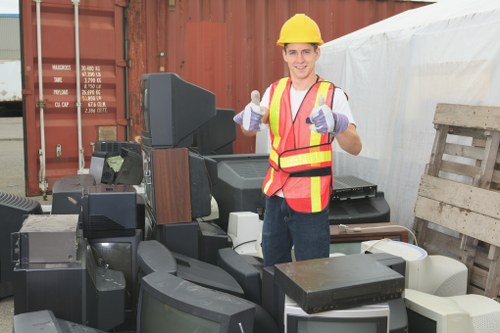
Handling hazardous or unknown materials
Where potentially hazardous materials are found during a flat clearance, operatives will stop work, isolate the item and notify a supervisor. We do not accept responsibility for specialist hazardous waste removal beyond our competency; instead we arrange for licensed disposal via authorised contractors. Typical hazardous items may include asbestos-containing materials, certain chemicals, sharps and electrical appliances with unknown defects. The precautionary principle is applied and items posing immediate danger are left for emergency or specialist services. Emergency procedures, incident reporting and review
In the event of an accident or near-miss, the priority is to ensure safety and provide first-aid or emergency services as required. Incidents are reported and investigated promptly to identify root causes and corrective actions. We keep an incident log, review lessons learned and update procedures accordingly. Regular audits and spot checks are undertaken to verify adherence to this policy. Non-conformance will be addressed through training, disciplinary measures where appropriate, and procedural adjustments.
Monitoring and review: this policy is reviewed annually or after significant incidents, changes in operations, or legislation. We commit to continuous improvement, encouraging staff to suggest safer ways of working and to take part in safety conversations. By embedding safety into our clearance culture we protect people, preserve property and sustain reliable rubbish removal and clearance services across our operational area.